Looking for an IOSH or NEBOSH course? Browse our 2026 courses here.


Fire Safety Regulations 2025: Residential Evacuation Plans – Your Questions Answered
Ligtas Resources
January 2026
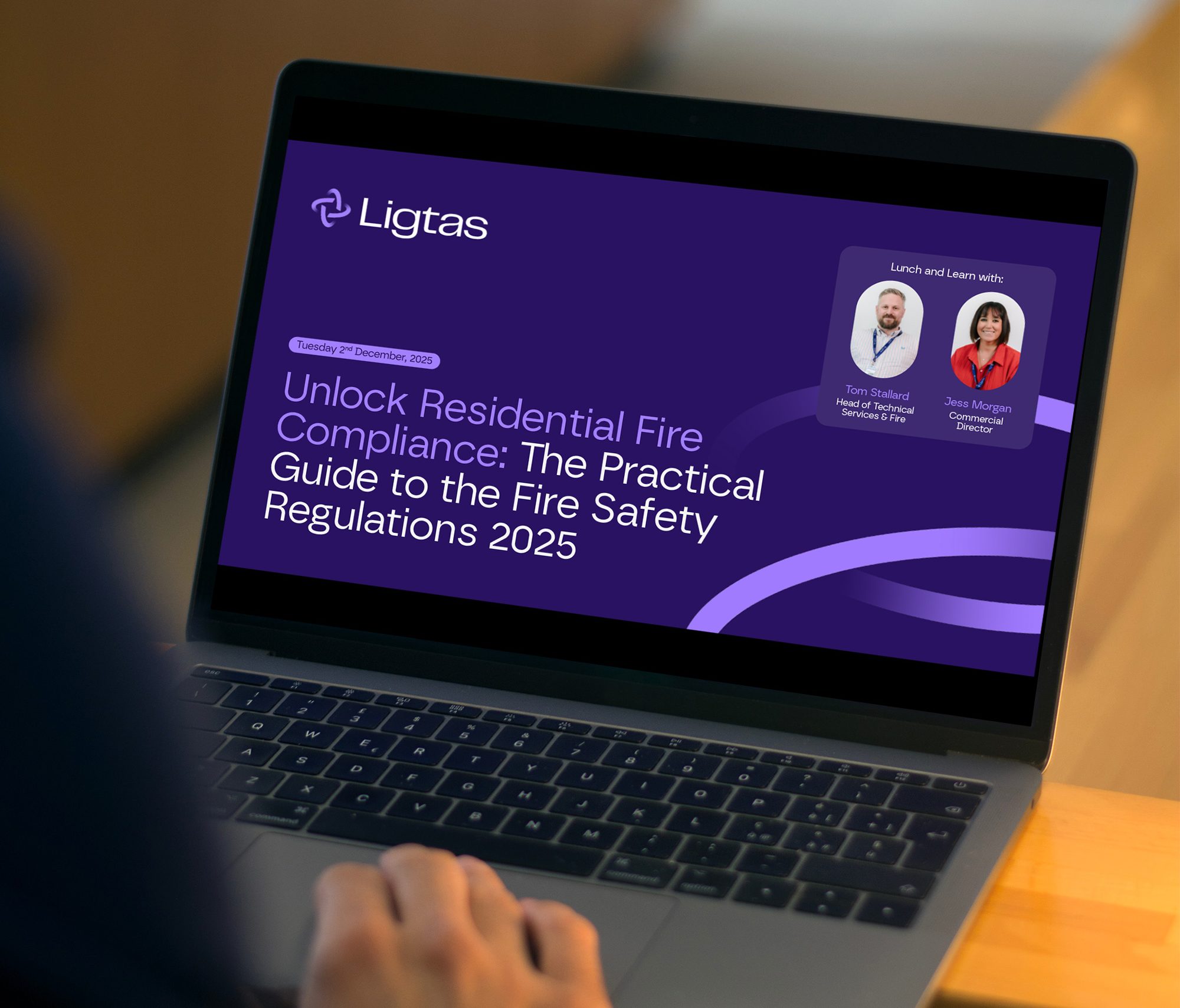
Following our webinar Unlock Residential Fire Compliance: The Practical Guide to the Fire Safety Regulations 2025, we received a large number of practical questions from property professionals across the residential sector.
This FAQs page brings your top 10 questions together, with clear answers from Tom Stallard, Head of Technical Services and Fire at Ligtas. Each FAQ includes a short video clip from the session, alongside a written summary to help you understand what the new regulations mean and how to prepare for them in the real world.
Question 1
What are the Fire Safety (Residential Evacuation Plans) (England) Regulations 2025?
The Fire Safety (Residential Evacuation Plans) (England) Regulations 2025 introduce new legal duties for Responsible Persons in certain residential buildings in England.
Their focus is on ensuring that residents who may need support to evacuate in an emergency are properly identified, consulted, and planned for, rather than evacuation planning being based on the building alone.
The Regulations are designed to embed a more person-centred approach to residential fire safety, placing residents and their individual needs at the heart of planning and decision-making.

Question 2
Why were these Regulations introduced?
The Regulations were introduced following recommendations from Phase 1 of the Grenfell Tower Inquiry, which highlighted serious failings in evacuation planning — particularly around resident involvement and support for those unable to self-evacuate.
The intention is to move away from a purely technical or building-focused approach to fire safety and towards one that recognises the real people living in buildings, their capabilities, and the support they may need during an emergency.
As Tom explains in the webinar, this is not about adding unnecessary bureaucracy, but about embedding competence, compassion and accountability into residential fire safety arrangements.

Question 3
Which residential buildings are in scope of the Regulations?
The Regulations apply to specified residential buildings in England. In practice, that includes high-rise residential buildings, as well as medium-rise buildings (11m and above) where a simultaneous evacuation policy is in place.
This is an important early step: if you manage a mixed portfolio, confirming which buildings fall within scope helps you prioritise resident engagement and planning well ahead of April 2026.

Question 4
What do the Fire Safety (Residential Evacuation Plans) (England) Regulations 2025 actually require Responsible Persons to do?
The regulations introduce four clear duty areas for Responsible Persons in-scope buildings. First, you must offer and undertake a Person-Centred Fire Risk Assessment (PCFRA) for each relevant resident (someone who may not be able to self-evacuate due to physical or cognitive impairment). Second, you must maintain a Building Emergency Evacuation Plan and share it with the Fire and Rescue Service.
Crucially, this isn’t a one-off exercise — the law also requires a review cycle, with reviews at least annually, and sooner if circumstances change. Finally, there’s an information management duty: you’ll need consent for data sharing, and you must record and store information securely (typically via a secure information box / premises information box).

Question 5
What do ‘reasonable adjustments’ look like in practice?
Reasonable adjustments should be practical, proportionate changes that genuinely help a resident evacuate safely — without being excessive, impractical, or disproportionate to the risk.
In practice, this might include measures such as visual or vibrating alarms for residents with hearing loss, evacuation chairs (where appropriate and where trained staff are available), ensuring flat entrance doors are up to standard and self-closing, and providing personal fire safety briefings in clear, accessible language.
Tom also highlights that “reasonable” may include simple communication adjustments — for example, avoiding overly technical fire safety language, using clearer terminology, or providing information in a translated format where needed, and involving carers or family members where that supports effective engagement.

Question 6
How do you make this work in the real world? A step-by-step compliance process
Making the Regulations work in the real world starts with a clear, structured process, rather than treating compliance as a single document or assessment.
As Tom explains, the first step is to identify which buildings you are responsible for that fall within scope of the Regulations. From there, organisations should put a consistent process in place to engage with residents, giving them a clear opportunity to come forward if they may need support to evacuate.
The next step is to offer a Person-Centred Fire Risk Assessment (PCFRA) to relevant residents. Importantly, this is an offer — residents remain in control and may decline, which must be recorded.
Alongside this, Responsible Persons must ensure there is a Building Emergency Evacuation Plan in place. This plan brings together the building’s evacuation strategy and any relevant information about residents who may need assistance, and it must be shared with the local Fire and Rescue Service in an appropriate format.
This process does not end once assessments and plans are completed. The Regulations require arrangements to be kept under review, with reviews at least annually, when a new resident moves in, or when circumstances change — helping ensure evacuation planning remains accurate, proportionate and people-focused over time.

Question 7
How and when should we initiate a PCFRA?
A Person-Centred Fire Risk Assessment (PCFRA) should be initiated once a resident has been identified as potentially needing support to evacuate and has been offered the opportunity to engage.
As Tom explains, this should not be treated as an automatic or blanket requirement. The starting point is always engagement and consent — residents must understand why the assessment is being offered and how it will help support their safety.
A PCFRA should be offered:
- When a relevant resident is identified
- When one is requested by a resident, for example if they have had a health issue which has caused a change in their mobility meaning that they now require one
- If there is a change in the building layout or escape routes
- As part of a regular review cycle, at least annually.
Importantly, initiating a PCFRA is about starting a conversation, not completing paperwork for its own sake. The process should be proportionate, respectful, and focused on identifying practical measures that genuinely support safe evacuation, rather than applying generic solutions.
Question 8
What should be included in a PCFRA?
A Person-Centred Fire Risk Assessment (PCFRA) should capture enough detail to understand where the resident is, what support they may need to evacuate, and what practical measures are realistic — while still keeping the approach proportionate and resident-led.
As Tom explains, a good PCFRA record will typically include:
- Resident details and location within the building (e.g., flat/wing/block, floor)
- The type of impairment or reason the resident may struggle to self-evacuate
- Clear consent, recorded upfront (including consent to share prescribed information where required)
- Fire safety measures inside the dwelling (e.g., smoke alarms/detection already in place)
- The support needs in an evacuation — whether physical assistance, communication support, or specialist equipment (e.g., evacuation chairs/hoists)
- The resident’s means of escape and any building features that affect evacuation (e.g., evacuation lift, refuges/temporary waiting spaces, protected routes)
- A summary section that captures the key prescribed information needed, provided to the FRS via an information box
- Sign-off and review date, with the resident involved in the process (it’s collaborative — not imposed)
The key point Tom reinforces is that the PCFRA isn’t just a form — it’s a structured, respectful way to identify support needs and agree reasonable, workable arrangements with the resident.
Question 9
Who is responsible for carrying out the PCFRA?
The legal responsibility for ensuring that Person-Centred Fire Risk Assessments (PCFRAs) are carried out sits with the Responsible Person for the building.
As Tom explains, this does not mean the Responsible Person must personally complete every PCFRA. The task can be delegated to a competent individual or organisation, but the accountability cannot be delegated.
The Responsible Person can be the building owner, freeholder, managing agent, social housing provider or tenant management organisation.
In practice, this means the Responsible Person must:
- Ensure PCFRAs are offered when required
- Be confident that anyone carrying them out is competent to do so
- Put appropriate oversight and governance in place
- Be able to demonstrate that the process is being managed properly
The key point is that outsourcing or assigning the task does not remove responsibility. The Responsible Person remains accountable for making sure PCFRAs are completed appropriately, proportionately, and in line with the Regulations.
Question 10
What type of competency is needed to carry out a PCFRA?
Carrying out a Person-Centred Fire Risk Assessment (PCFRA) requires more than standard fire safety training. As Tom explains, this is not just a technical assessment — it’s a people-focused process.
Anyone carrying out a PCFRA needs training and competence across several areas, including:
- Fire safety and evacuation principles, including how the building’s strategy works in practice
- Awareness of the Equalities Act, to understand a wide range of physical, sensory and cognitive impairments
- Communication skills, so conversations with residents are sensitive, clear and respectful
- Understanding of consent and data protection, as personal and potentially sensitive information is involved
The key point is that PCFRAs require a blended skill set. Organisations should be cautious about assuming that someone is competent simply because they have a fire safety background, and should ensure appropriate training, support and governance are in place before undertaking assessments internally.
Explore more from Ligtas
Webinar
Webinar Replay
Catch up with our Unlock Residential Fire Compliance - The Practical Guide to the Fire Safety Regulations 2025 webinar.

NEBOSH
NEBOSH Certificate in Fire Safety
Tailored course for professionals responsible for fire safety in the workplace.

Insights
Residential PEEPs Insights
Read our webinar insights to explore what the new regulations will mean in practice.